
Design Tools:
InDesign — Photoshop — After Effects
Introduction:
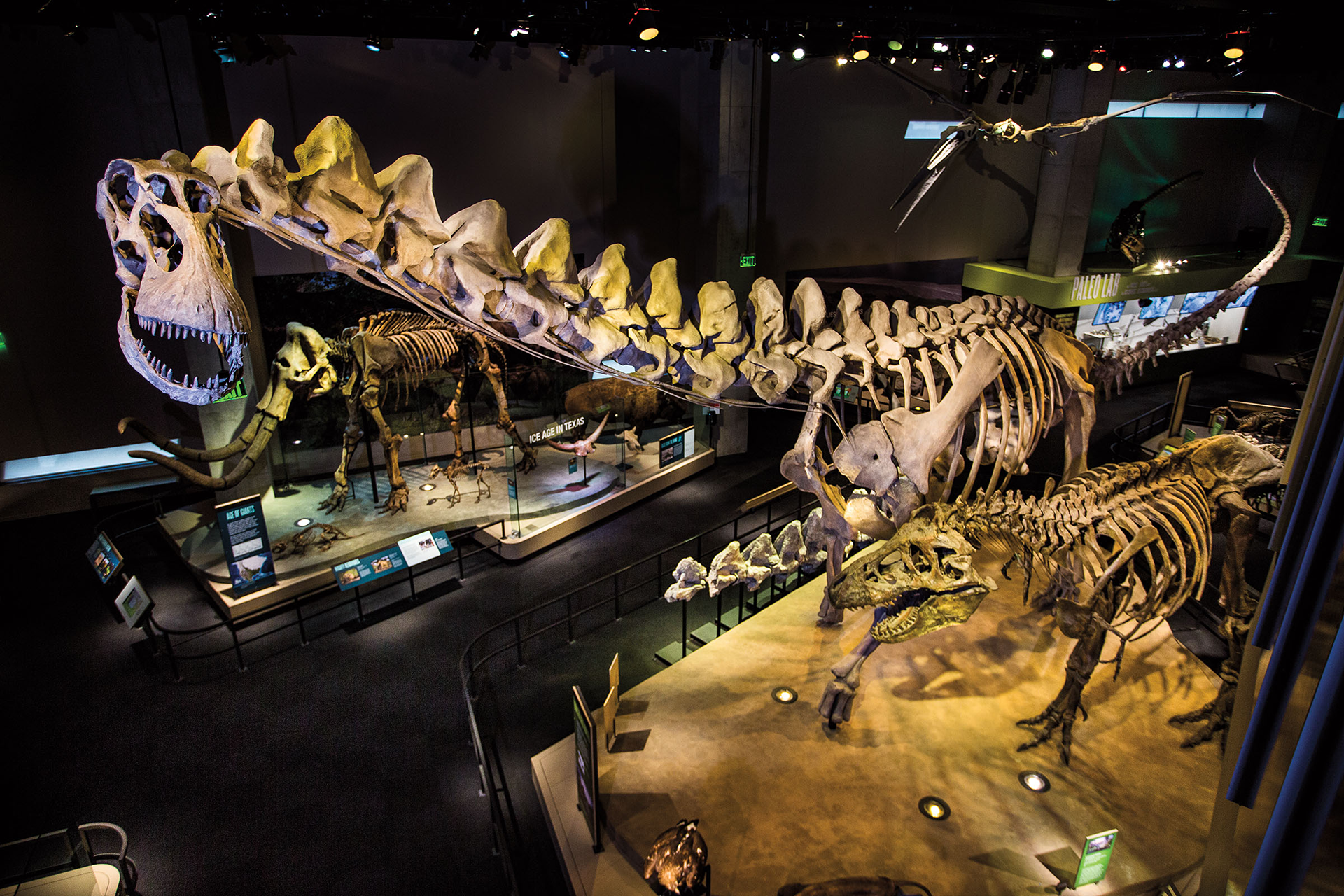
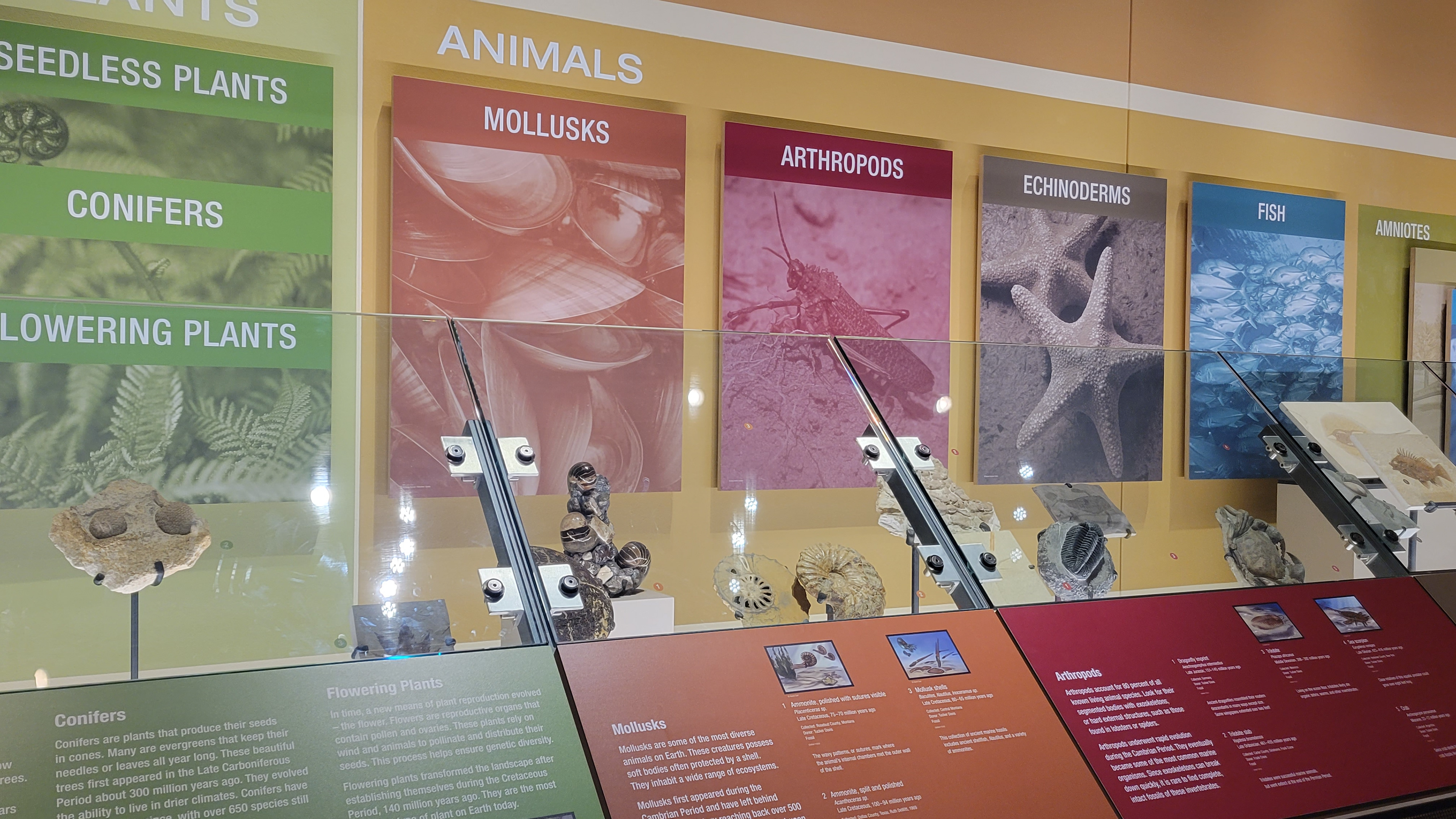
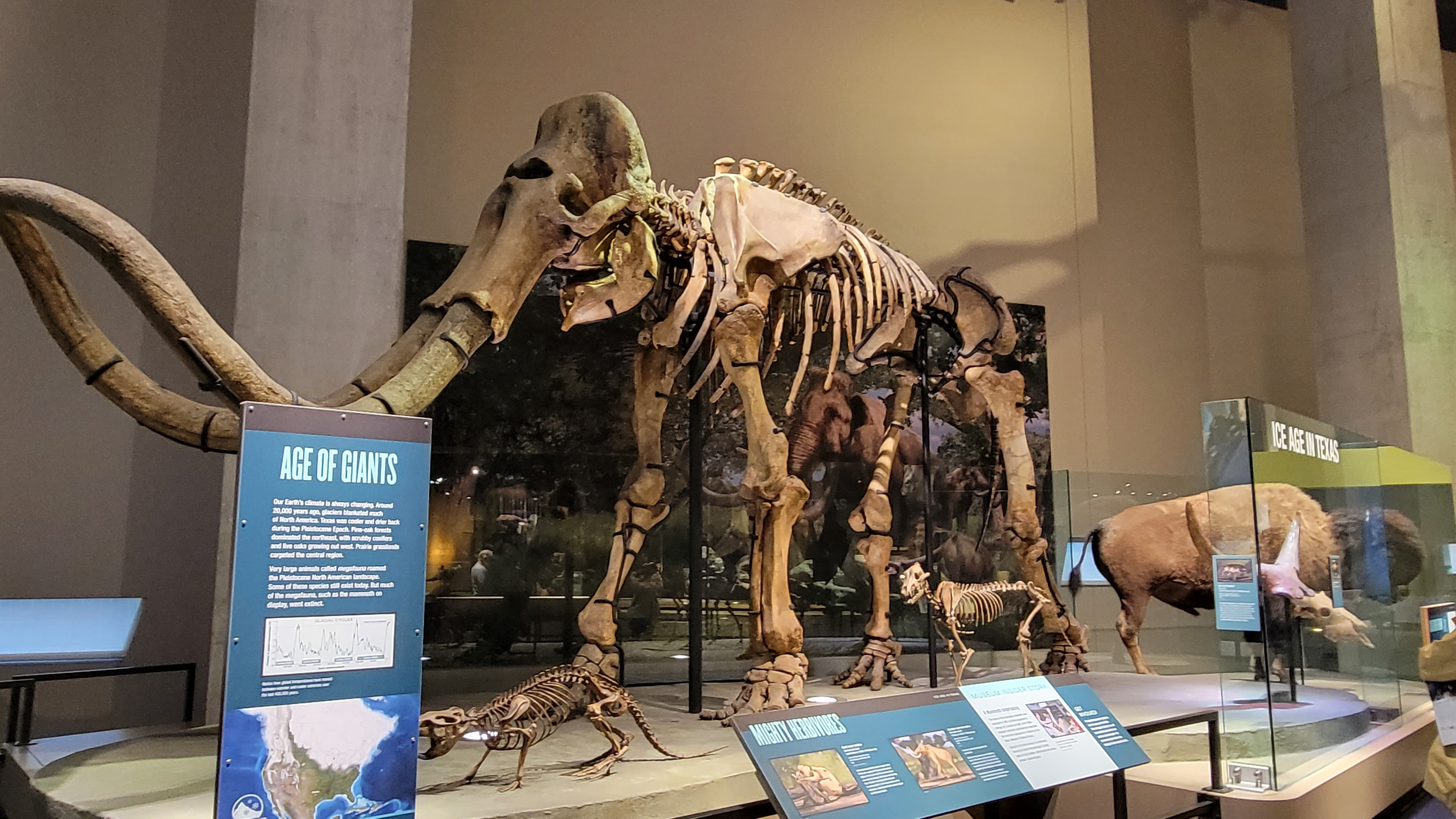
The Perot Museum of Nature and Science is a museum located in Dallas, TX and features 11 different permanent exhibits, including interactive exhibits, hands-on science activities, children's play experiences, as well as dinosaur fossils. This museum houses a large collection of research specimens and objects, and while it's audience is designed for all ages, it is more targeted towards younger audiences.
For this environmental/experiential graphic design project, I added and extra imaginary art exhibit to the museum. For this project specifically, I changed the name of the museum to the Perot Museum of Nature, Science, and Art to give the museum a refined, modern feel and to help expand my design skills to more simple and modern designs. This fake added art exhibit would be added to the 5th floor, switched out for some of the office spaces that reside there currently. This new, more sophisticated museum wouldn't be aimed towards the younger audience like the original is, and would offer a true all-age experience.
The Building:
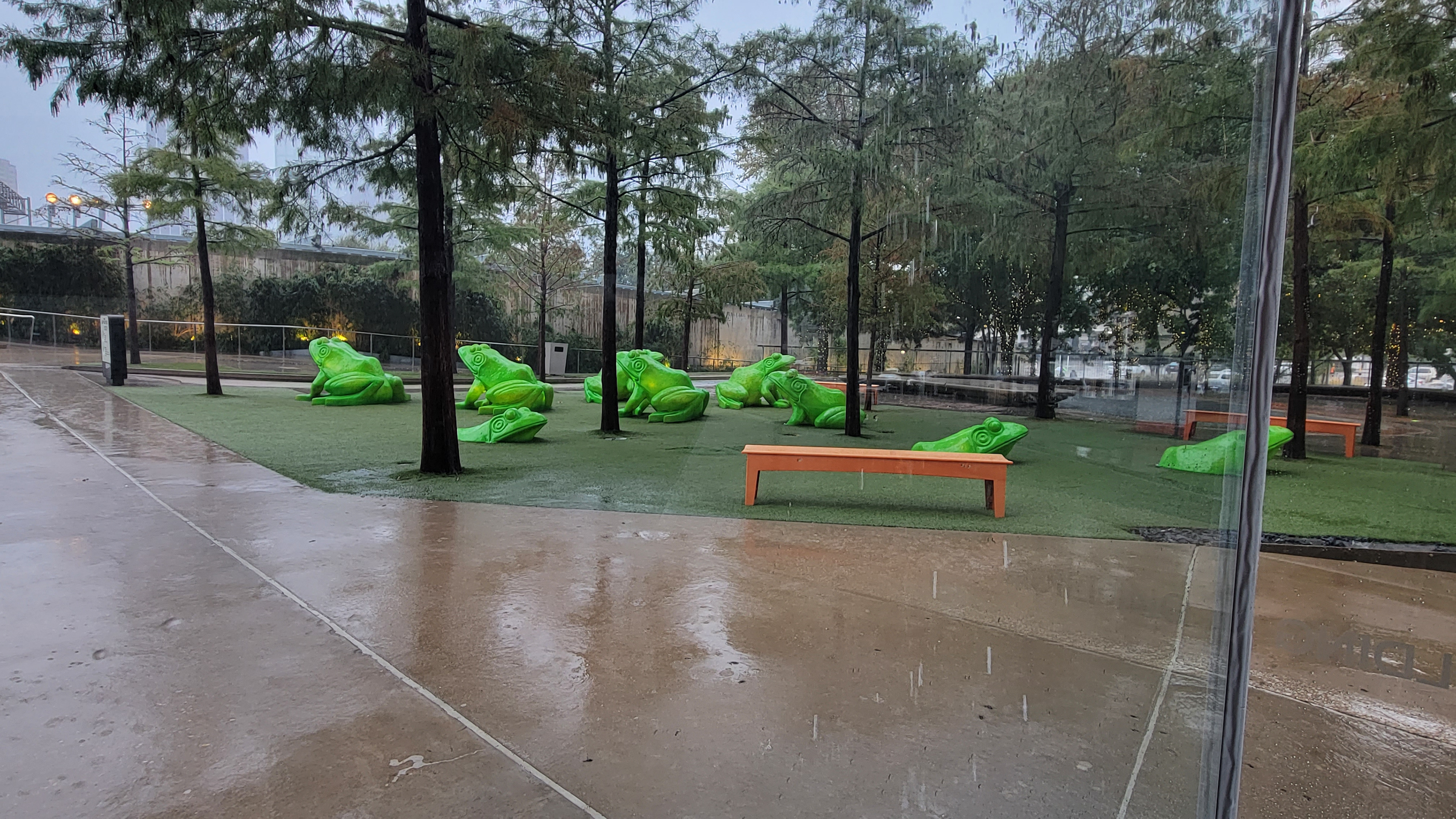
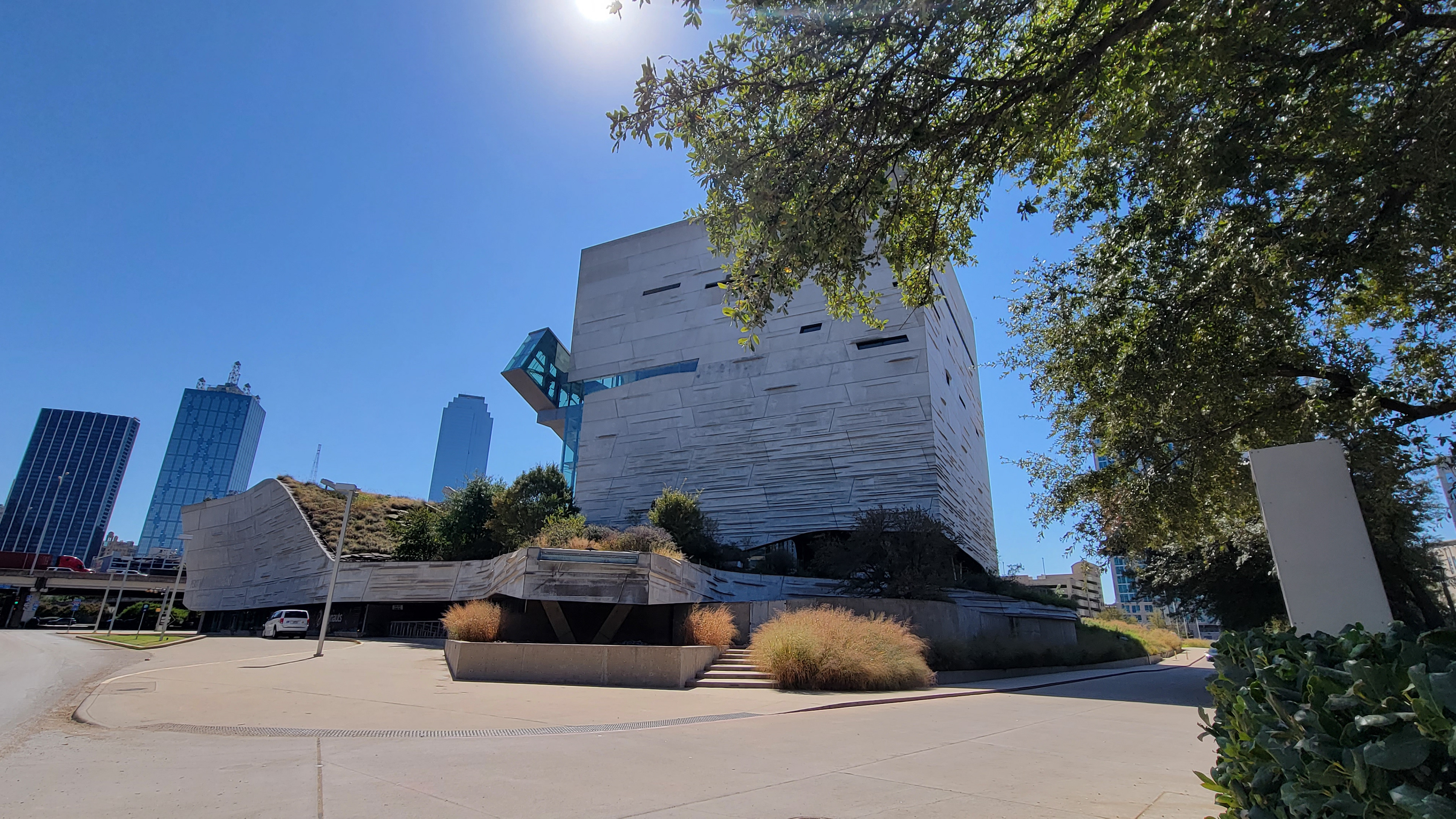
"The building itself is designed to be a didactic tool for demonstrating scientific principles at work. As an institution aimed at enhancing the public understanding of natural systems, addressing and exemplifying environmental responsibility was a critical aspect of this goal. Various strategies are used throughout to inspire learning and comprehension, including revealing the building structure and mechanical systems, fore-fronting energy-saving and water-reuse technologies, and integrating native Texan ecologies into the landscaping. Evoking geologic striations, the precast concrete facade utilized an innovative mold technique to create intricate wave forms using a minimum amount of panel types."
"Breaking the solid geometry of the museum cube, a glass-encased 54 foot continuous flow escalator moves patrons up from the ground floor to a cantilevered platform offering expansive views of downtown Dallas. Visitors spiral downward through the galleries and atrium space, continuously returning back to the city as a means of orientation and pause between exhibits."
Quote from Morphosis Architecture, Perot Museum of Nature and Science
(click for website)
(click for website)
Visual Research/Inspiration:
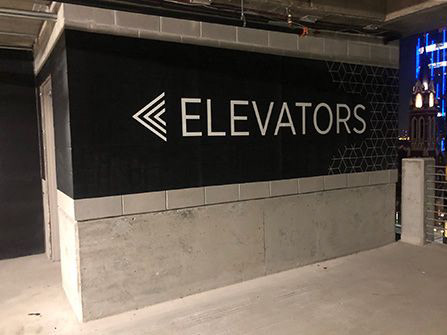
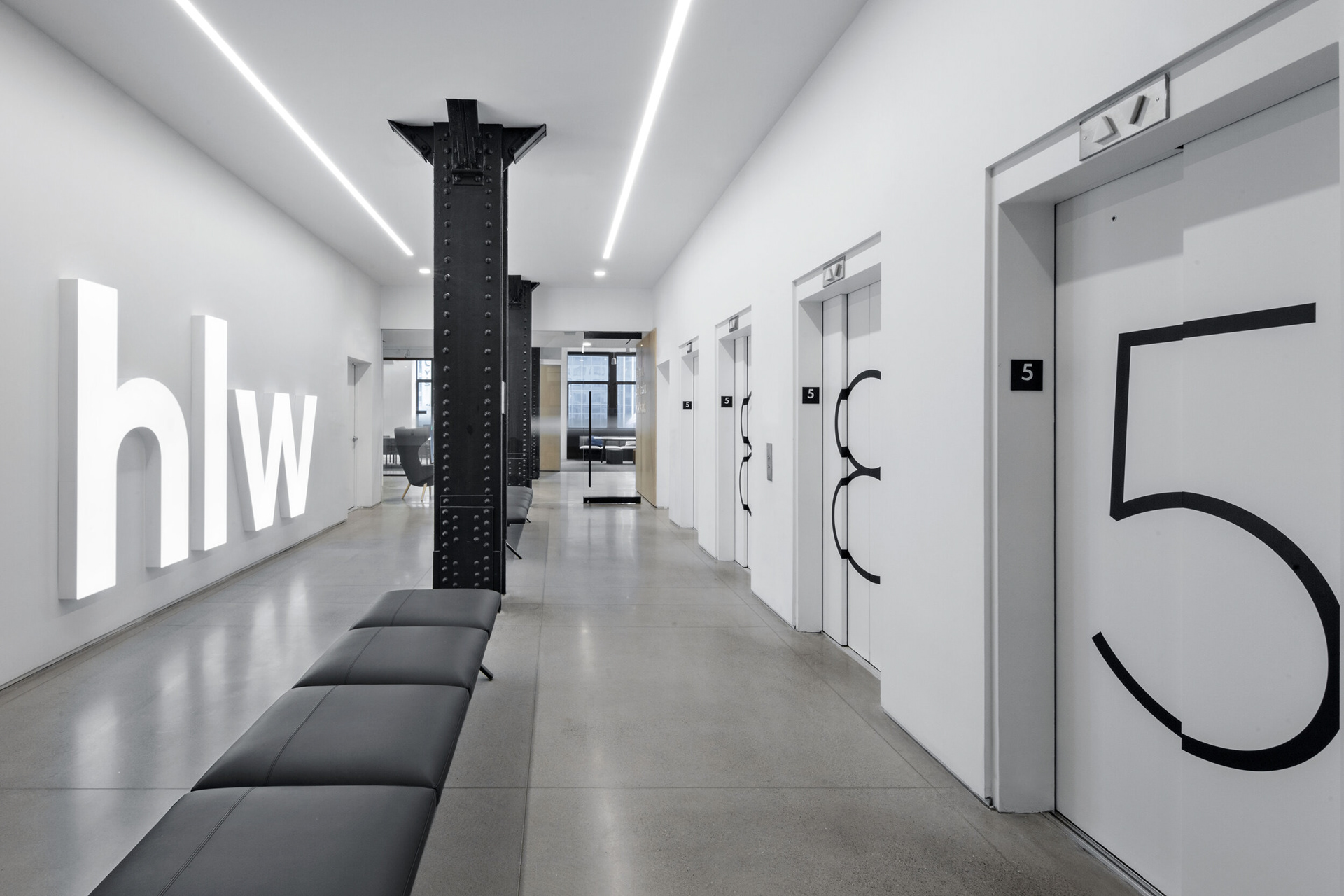
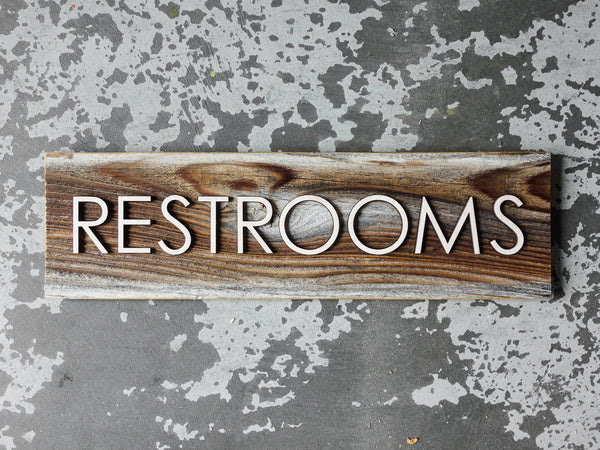
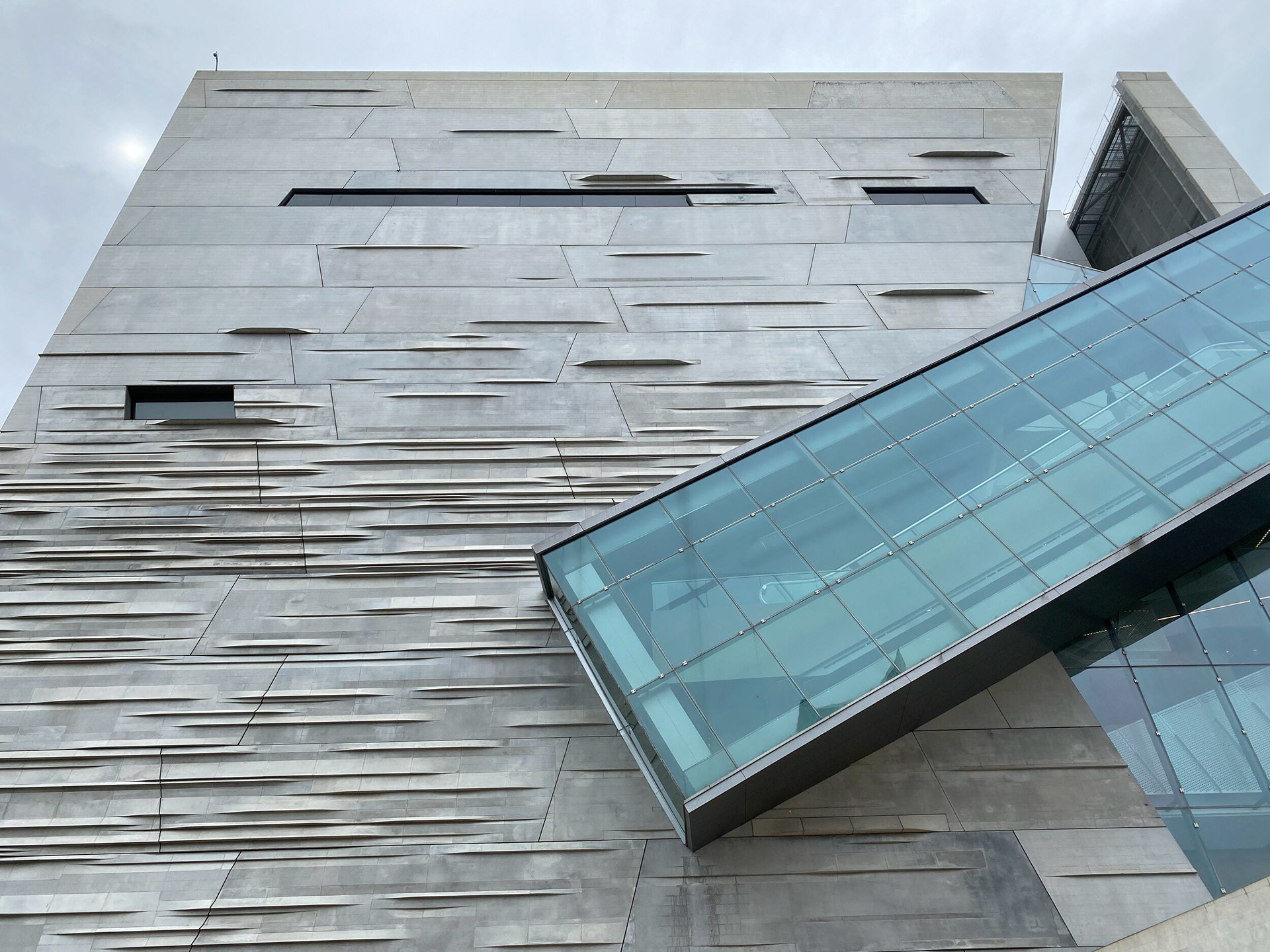
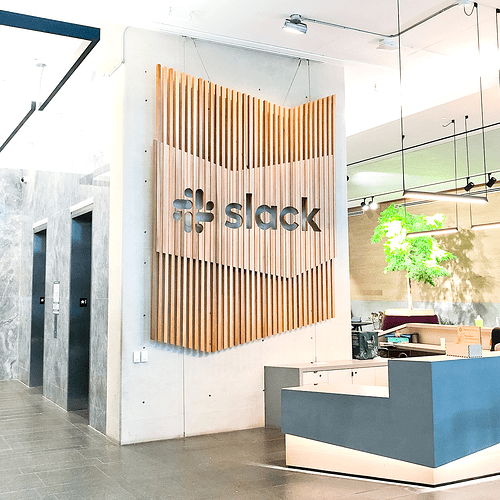
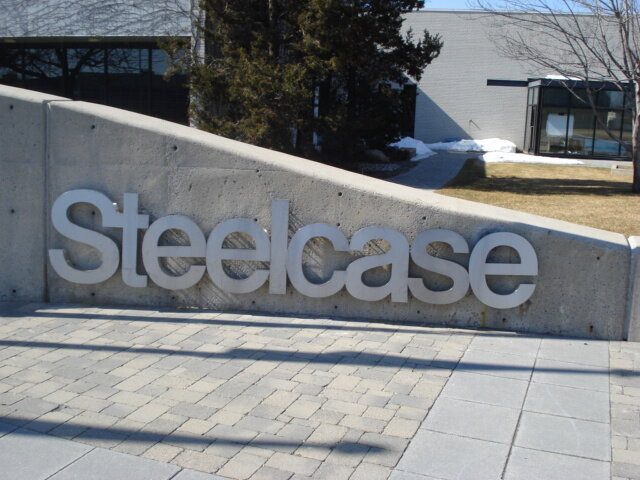
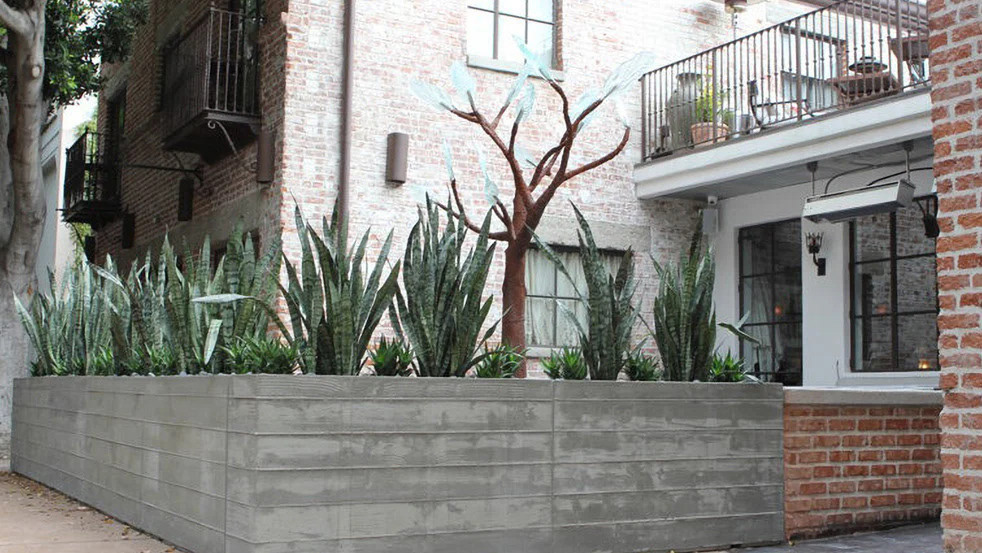
For my environmental signage, I really wanted to go with sleek and minimal to get that modern element of design I was looking for. I really liked the mixing of materials, such as using stained steel as a main element accompanied by concrete or wood. I was also very inspired by the exterior of the building, and the concrete lines that are all over the outside of the building, shown below.
Materials:
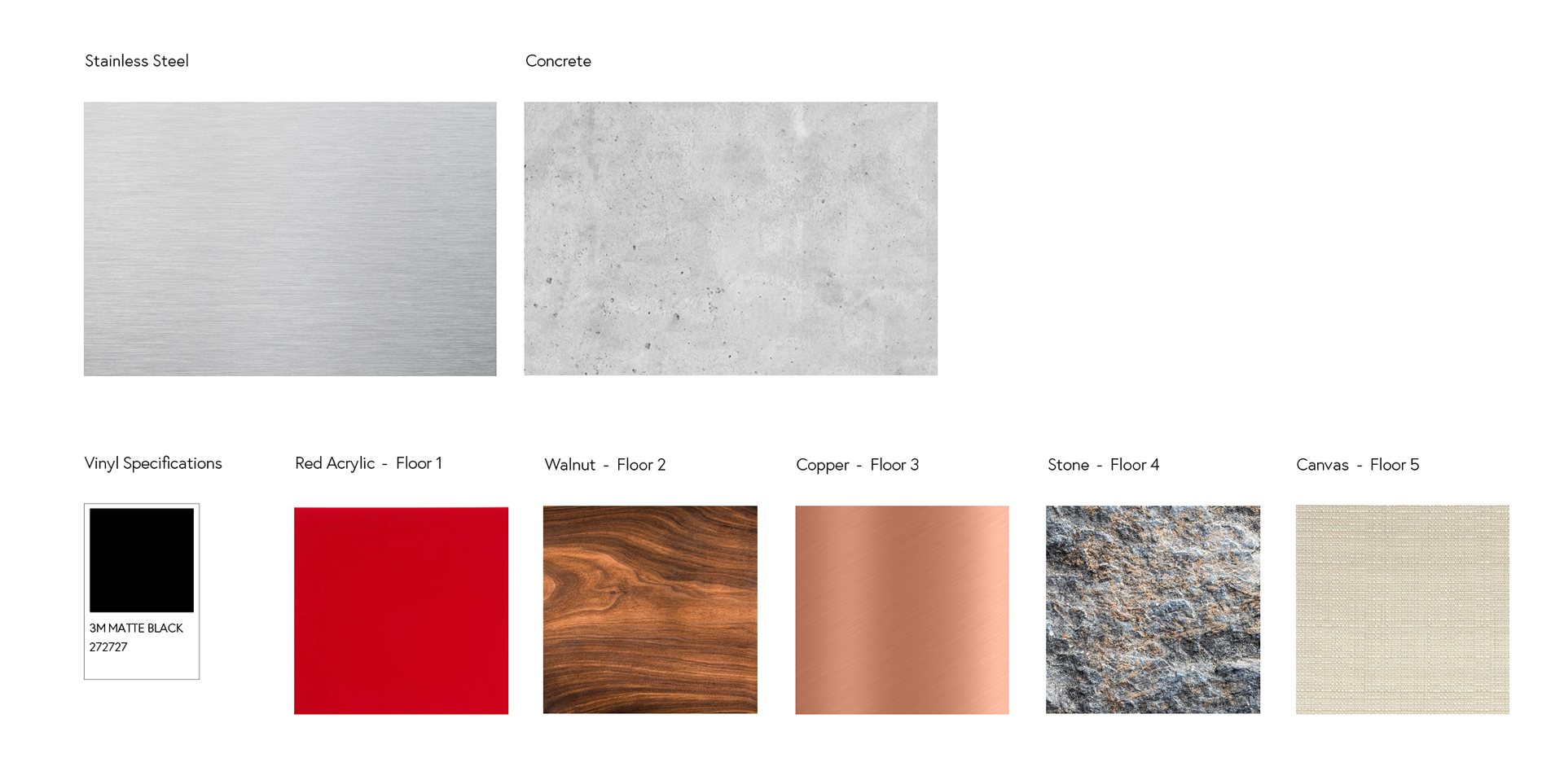
For my main signage, my main two materials were stainless steel and concrete. For most of my larger signage, concrete is used as the base and features a stainless steel accent that is attached to the concrete. One of my large concrete signs also features matte black vinyl instead of stainless steel for readability in the lobby of the museum.
For my other materials, these would be floor specific, chosen based on each of the exhibitions on each of the floors, mainly features in the elevator signage or directional exhibition signage. For the first floor, this floor features a children's museum as well as a traveling children's exhibition, so I chose red acrylic to give a child friendly feel. For the second floor, I chose a walnut wood to represent the human and animal life exhibitions, since it deals with nature. I chose copper for the third floor to represent the energy hall, and I chose stone for the fourth floor to represent the prehistoric life hall, as well as the universe hall. The fifth floor would have canvas in the signages, and this is to represent my made-up art exhibition.
Branding:
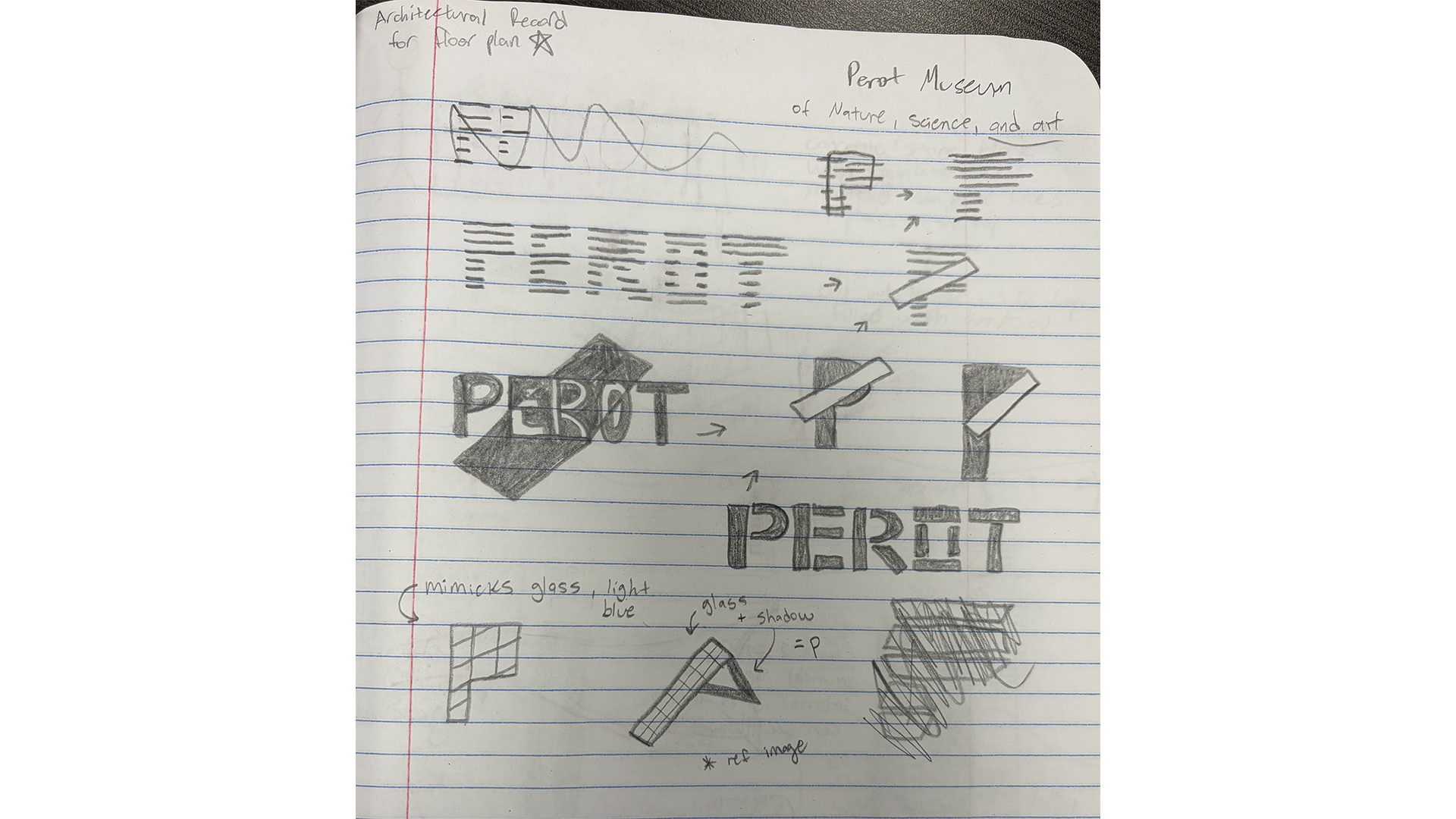
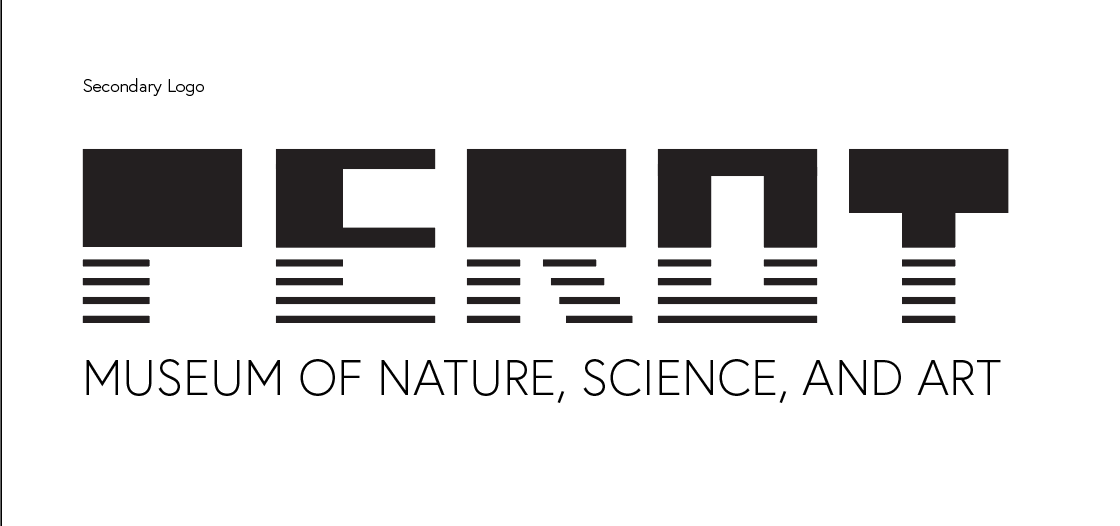
For my logo, I took inspiration from the exterior of the PEROT building itself, as you will see later that the exterior has many thin concrete lines that stick out of the building a tiny bit. This is the main design element I borrowed, and incorporated it into the bottom half of my wordmark. The top half is solid to symbolize the sturdiness of the concrete that the building is made out of, and the blocky shapes are reminiscent of the large window on one side of the building that holds an escalator within.
Graphis New Talent 2026 Award Winner — Honorable Mention

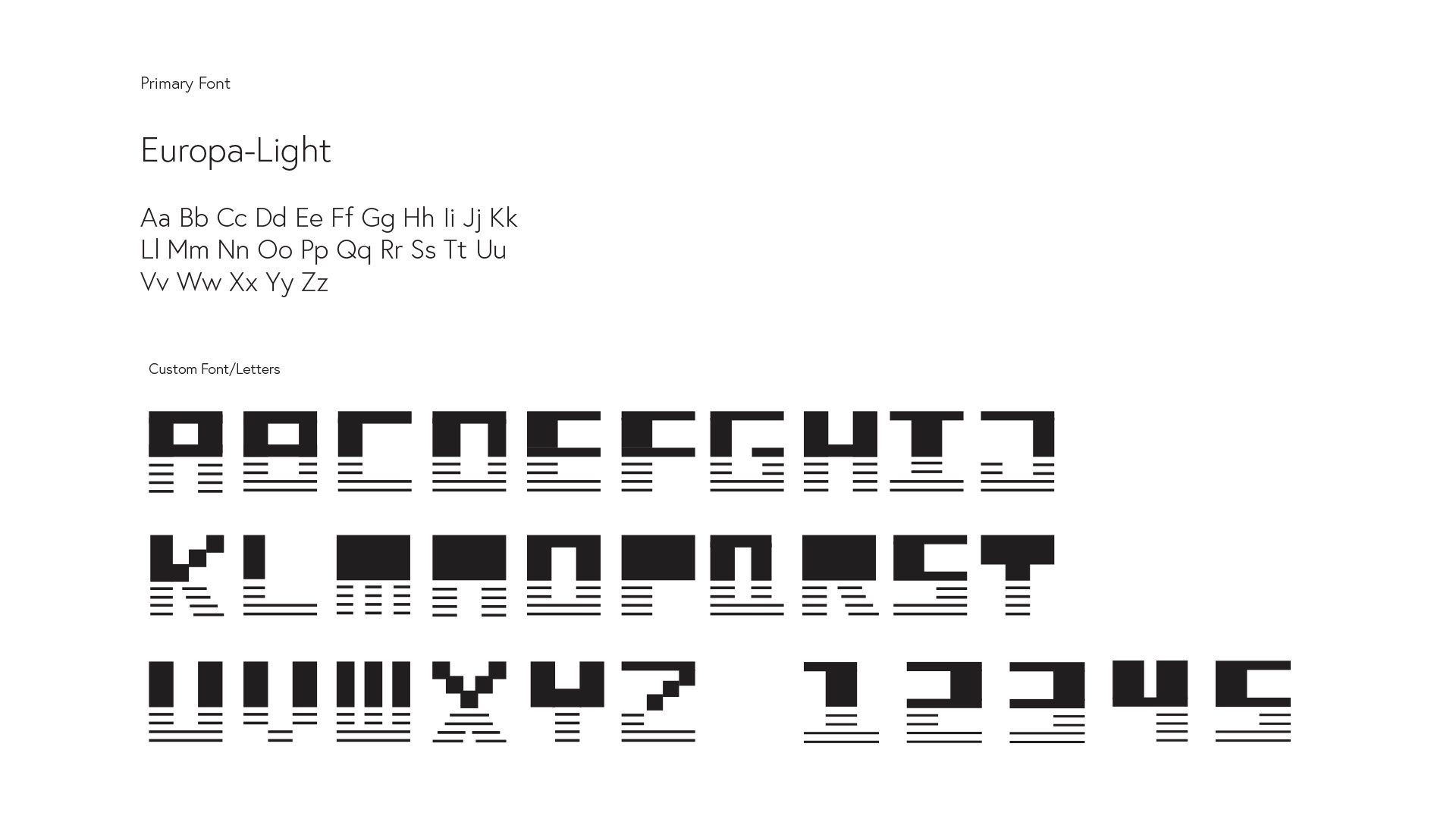
While my primary font was Europa light, I did create a custom alphabet in my spare time, as well as create the numbers one through five for my elevator signage. I think this is a neat addition to the branding, and was a puzzle in itself for me to make, fun nonetheless.
Schematics:
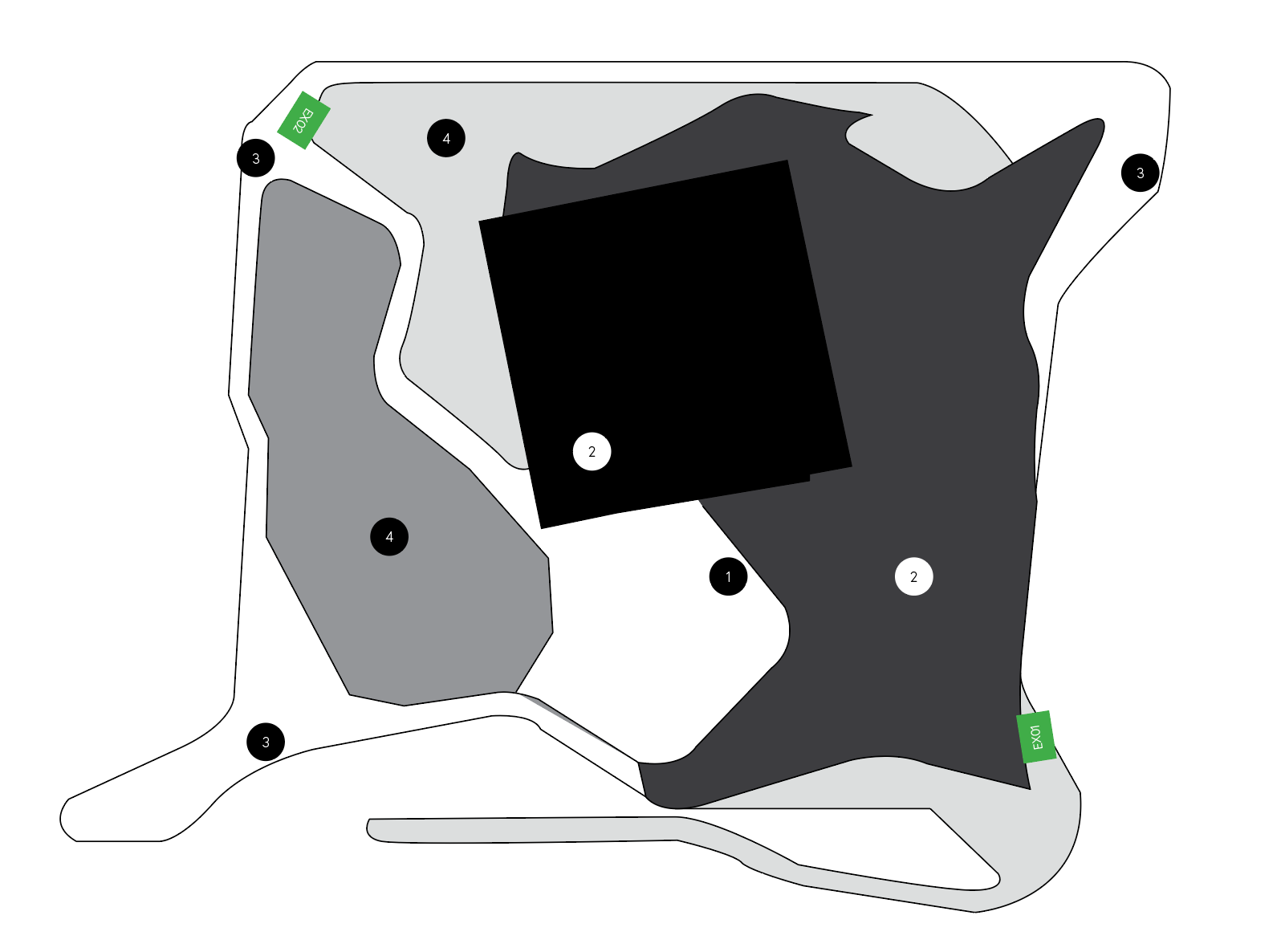
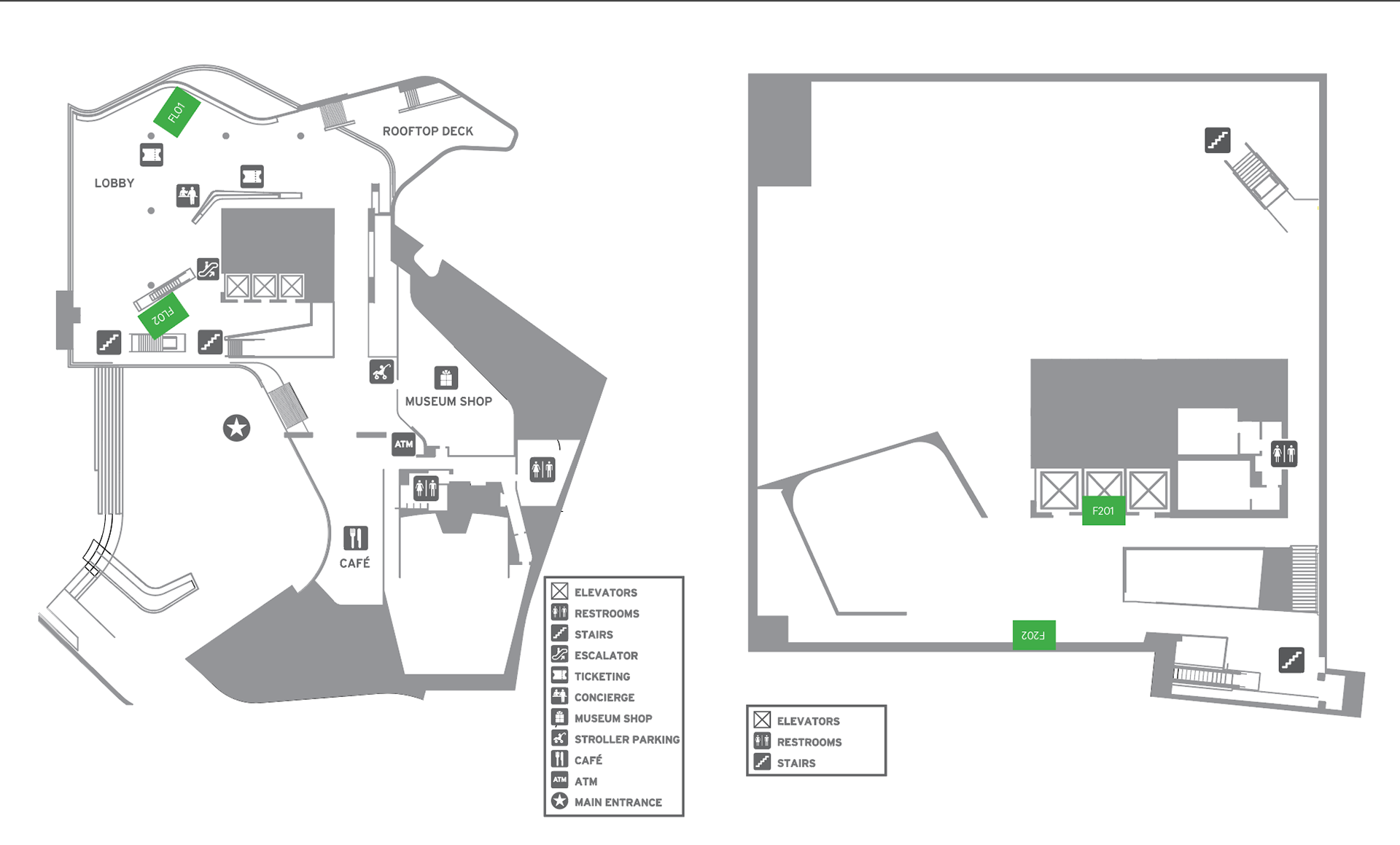
These are maps that I created to show where each of my signages would be placed, both exterior and interior.
Map Key:
(1) Main Entrance (2) Perot Building (3) Sidewalk/walkway (4) Trees/grass/foliage
(1) Main Entrance (2) Perot Building (3) Sidewalk/walkway (4) Trees/grass/foliage
EX01: Exterior signage 1, large stainless steel logo
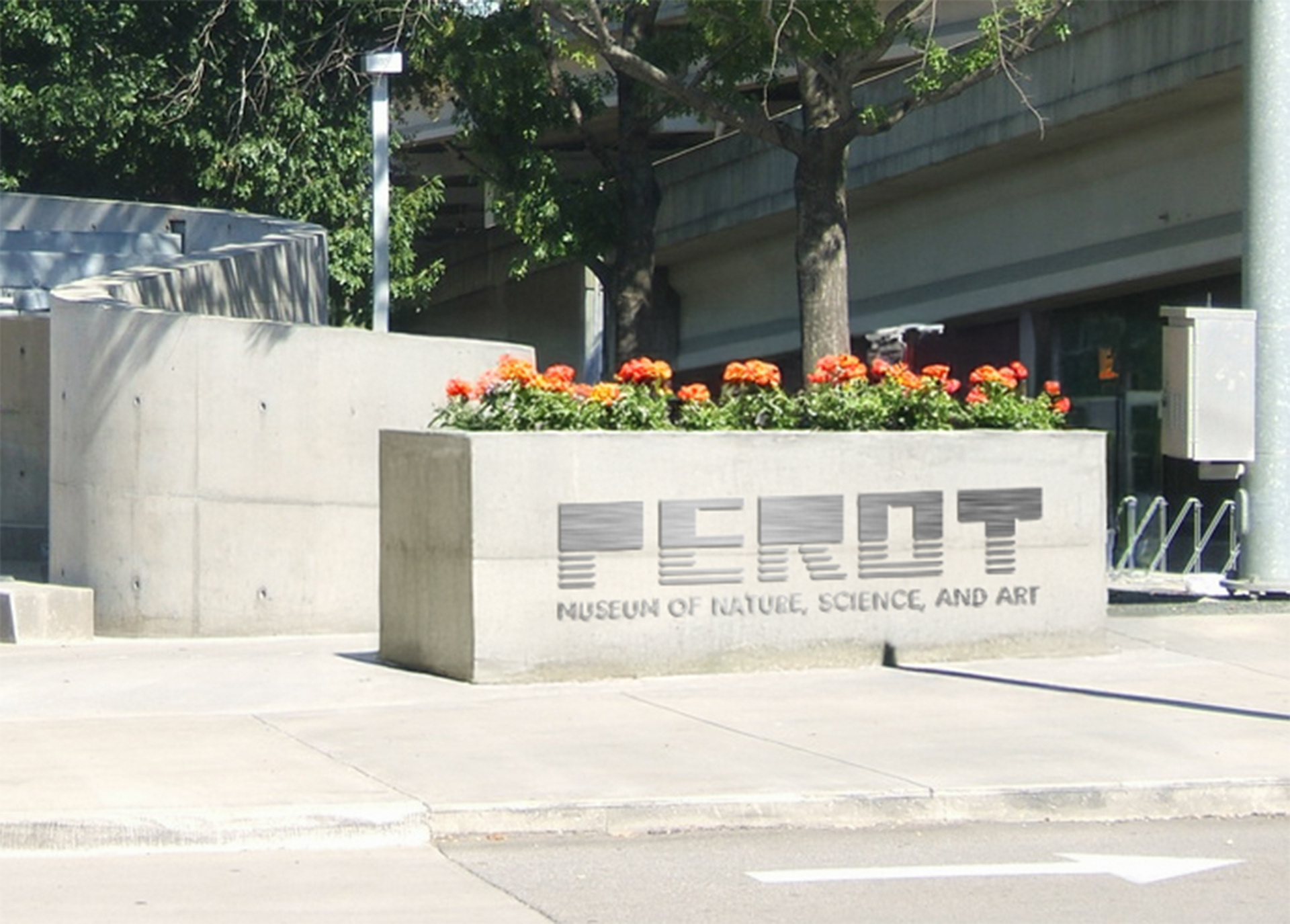
EX02: Exterior signage 2, concrete branded planter
EX02: Exterior signage 2, concrete branded planter
Map Key:
FL01: Lobby exhibition signage
FL02: Donor Display
F201: Elevator Signage
F202: Exhibition Name Signage
FL01: Lobby exhibition signage
FL02: Donor Display
F201: Elevator Signage
F202: Exhibition Name Signage
Environmental Signage:
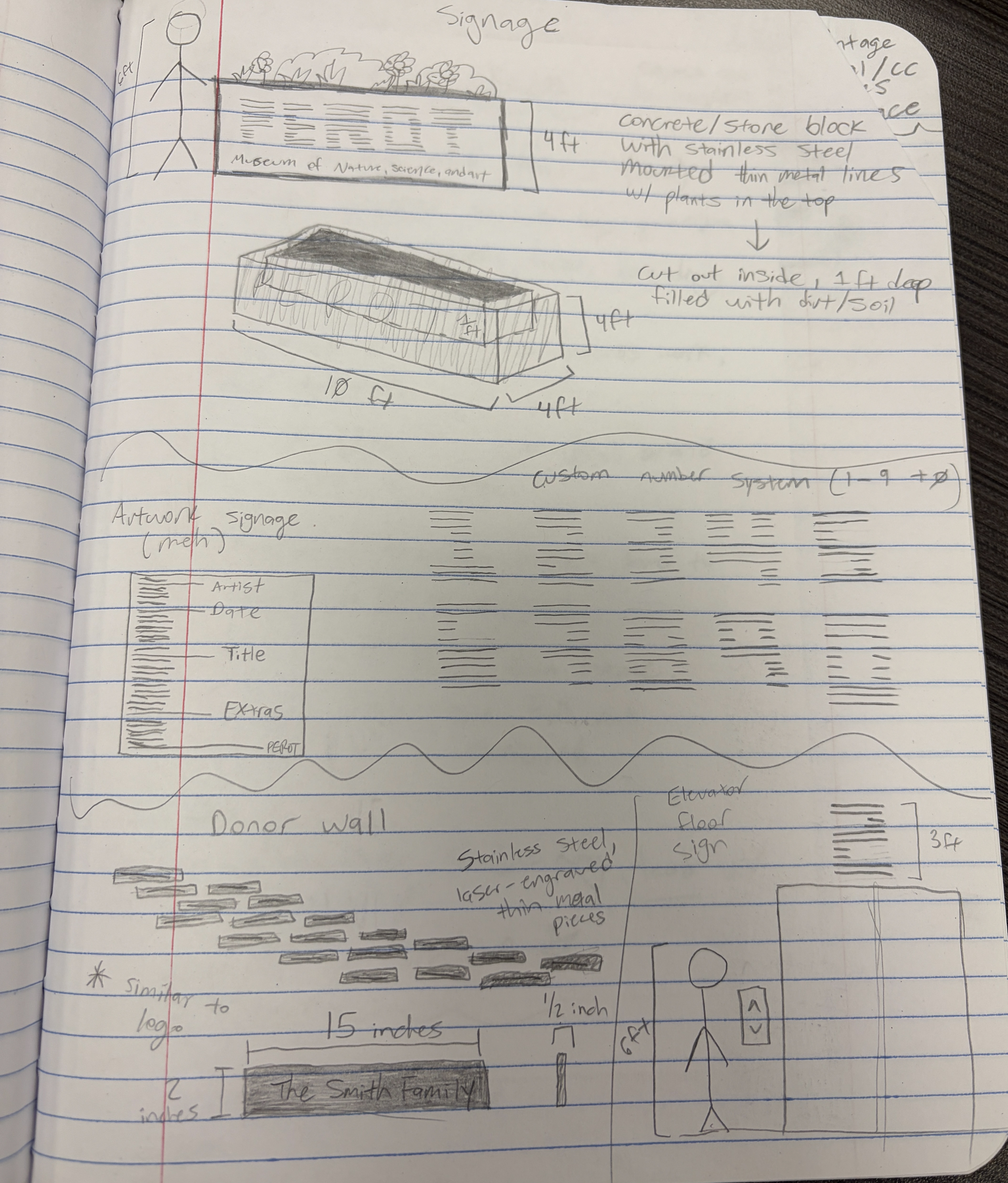
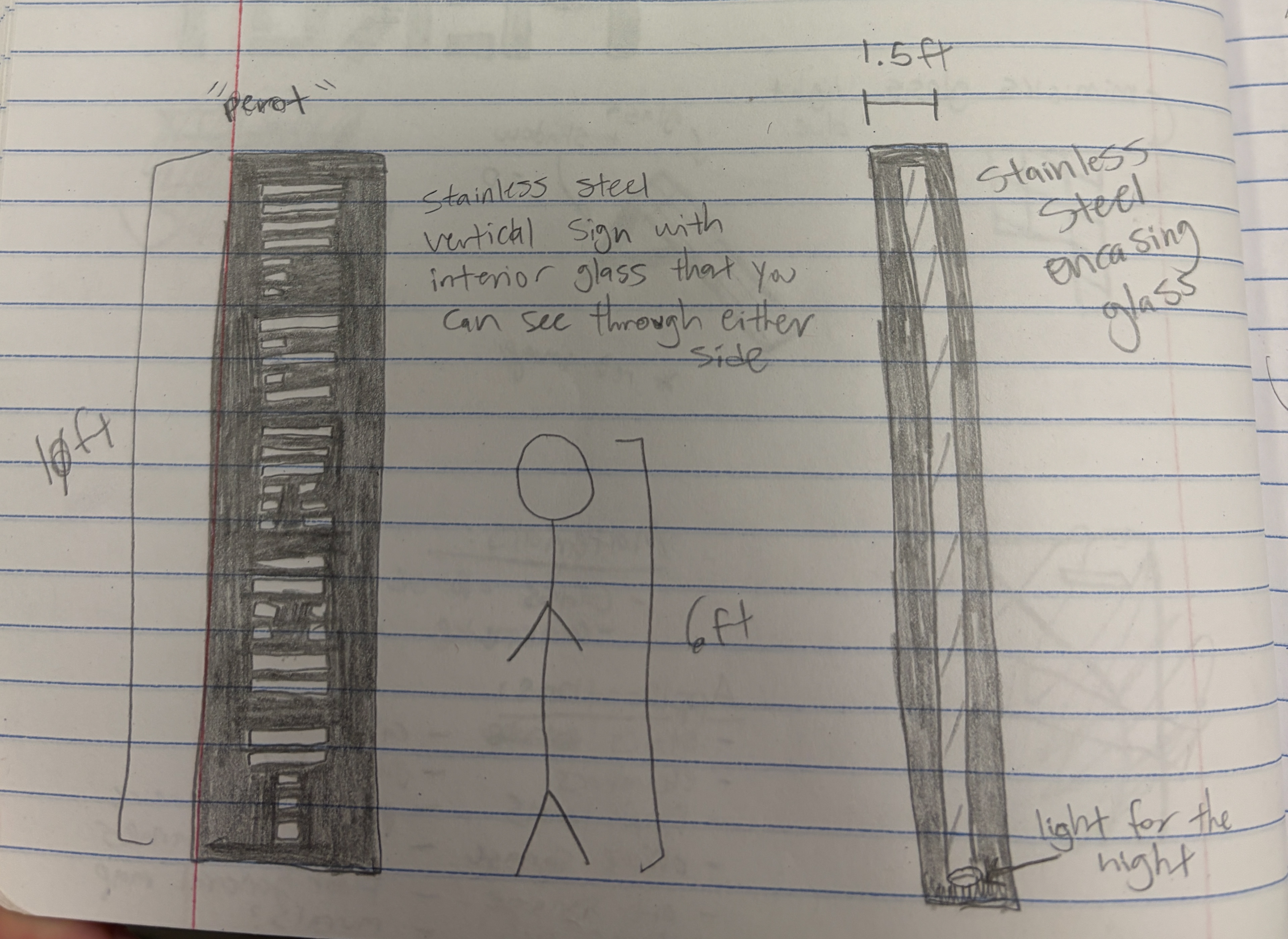
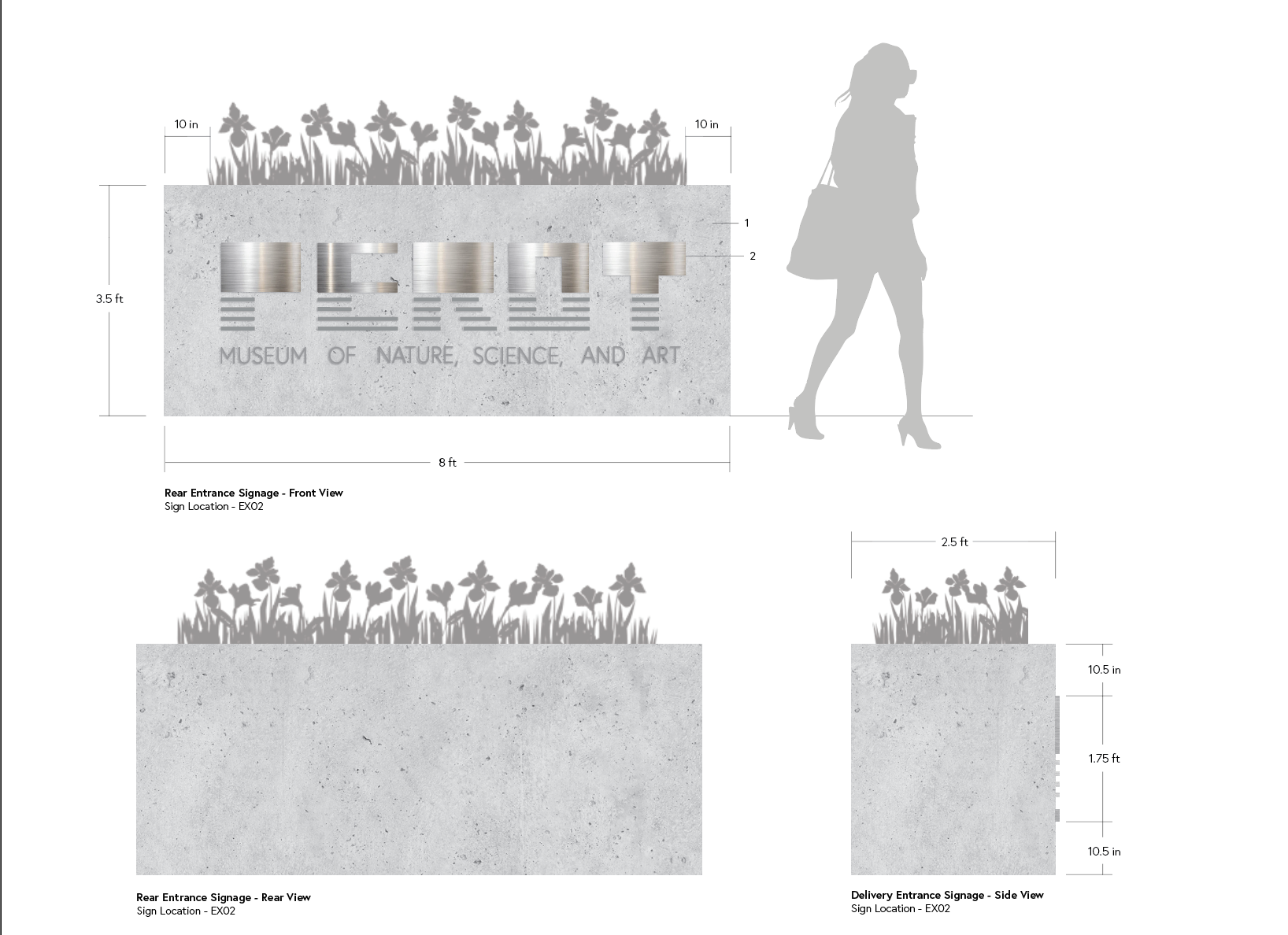
Unfortunately the signage sketch of the vertical light-up PEROT sign was not created in my final designs, but my two exterior signages are the logo on the side of the building, made out of stainless steel, and a concrete slab that is hollowed out in the middle to be filled with dirt and plants. This concrete slab sign features the logo in stainless steel attached to the front, as you will see below.
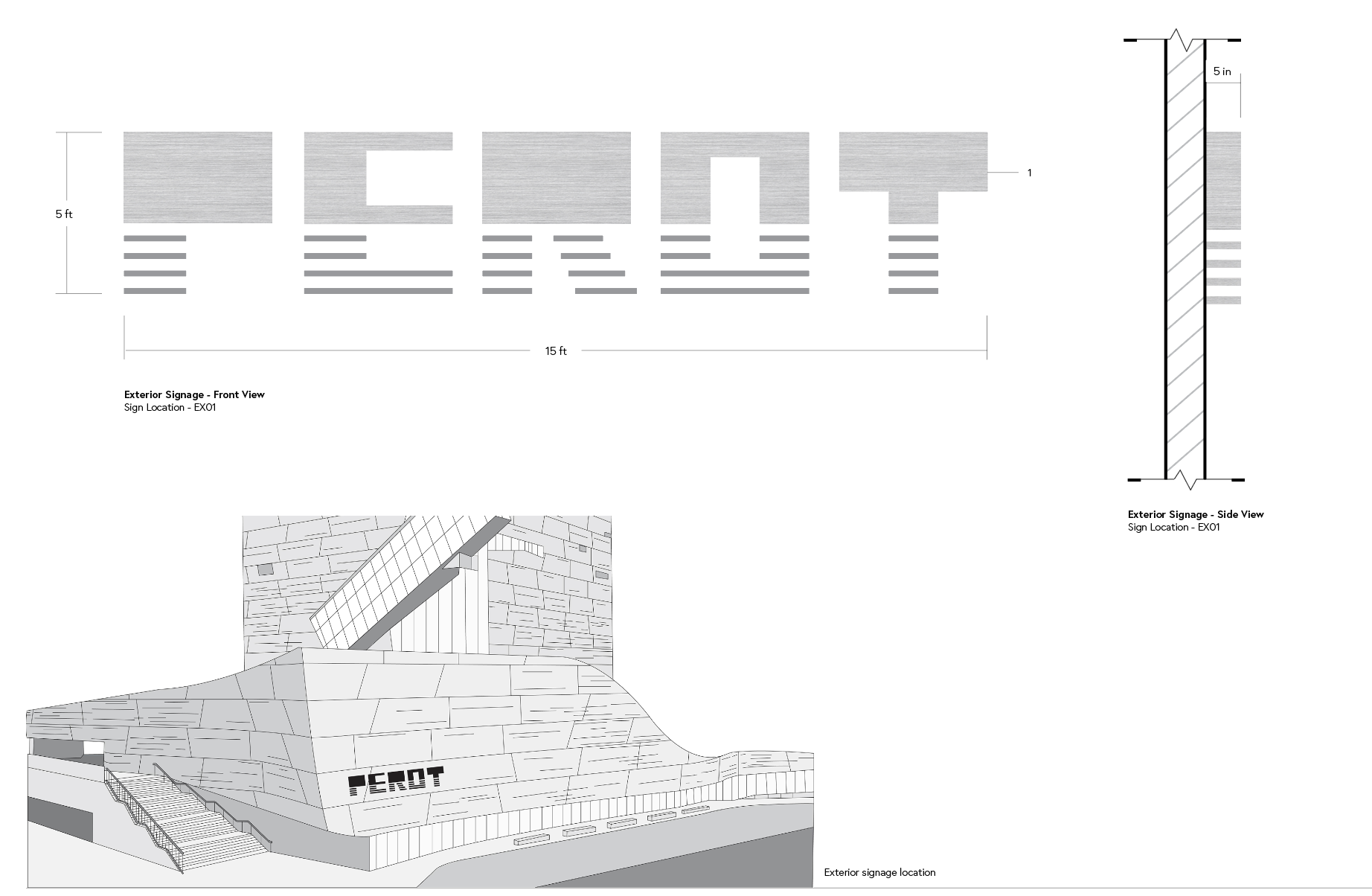
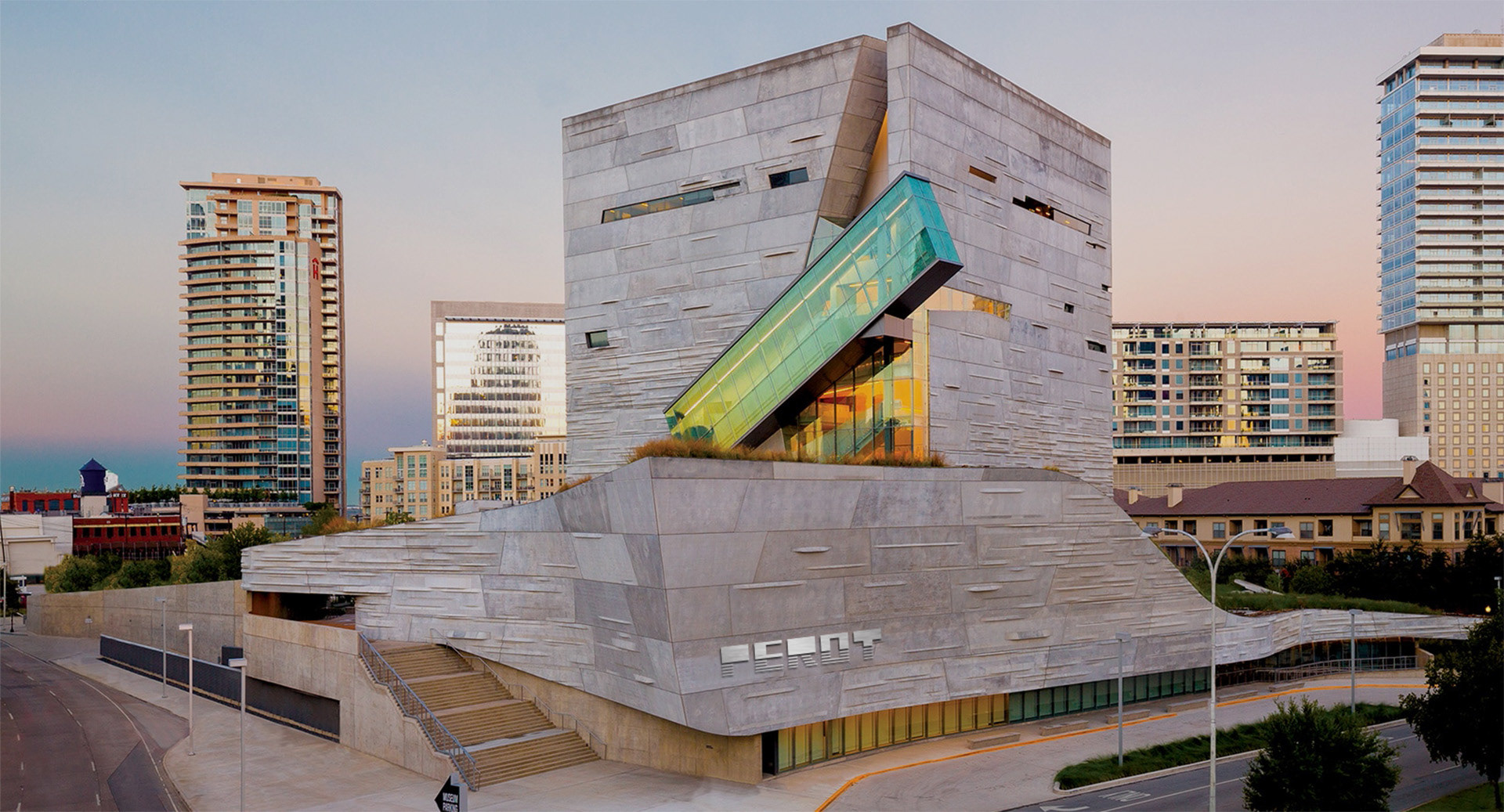
This is in the same spot as the current logo, so the design would just be replaced with my newer, modern one!
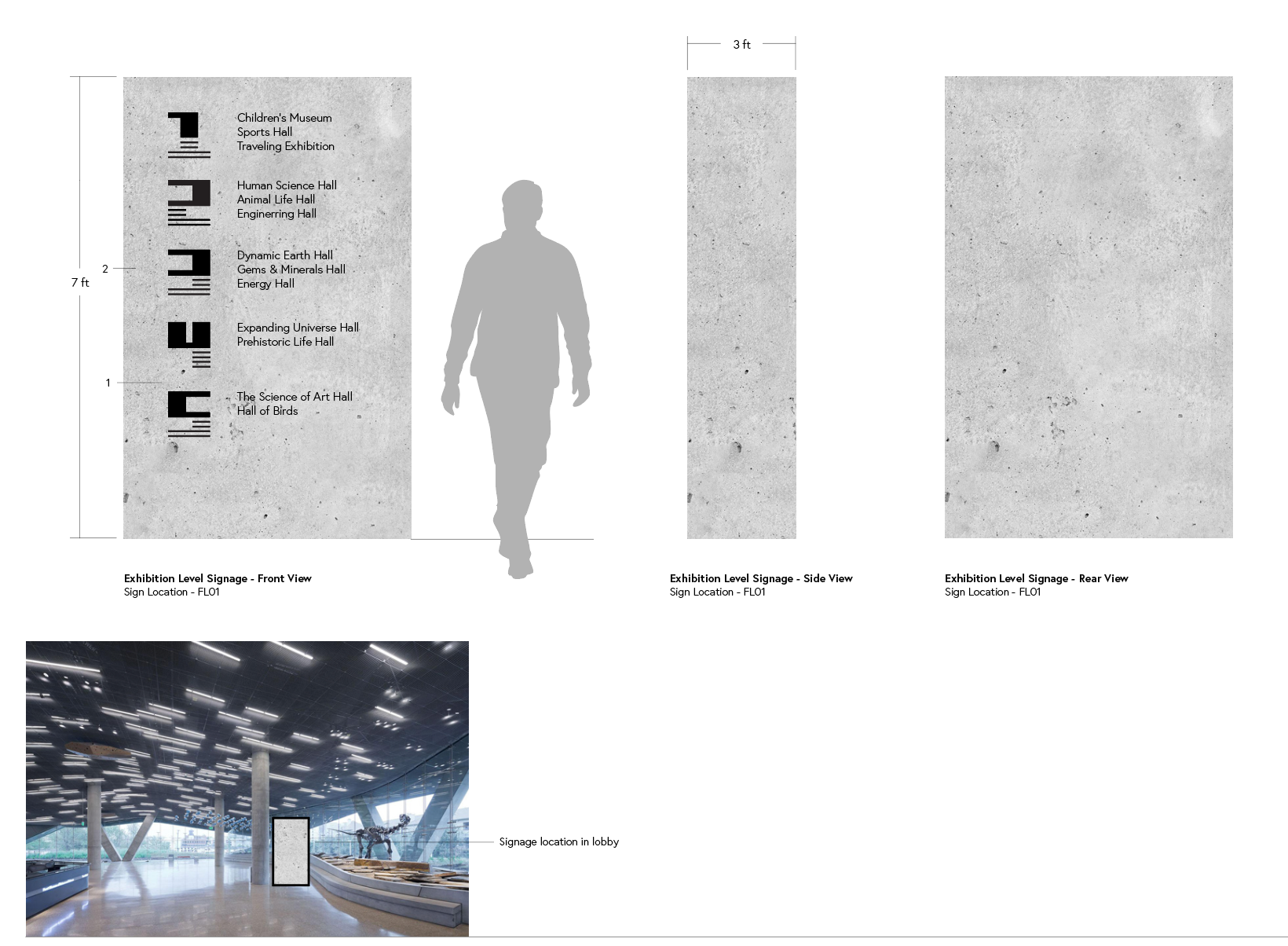
This signage below would be placed in the lobby, and acts as a wayfinding method for visitors, they way when they're buying their tickets in the lobby they know exactly where each exhibit is located, and what the museum has to offer overall.
Material Key:
(1) Concrete (2) Matte Black Vinyl
(1) Concrete (2) Matte Black Vinyl
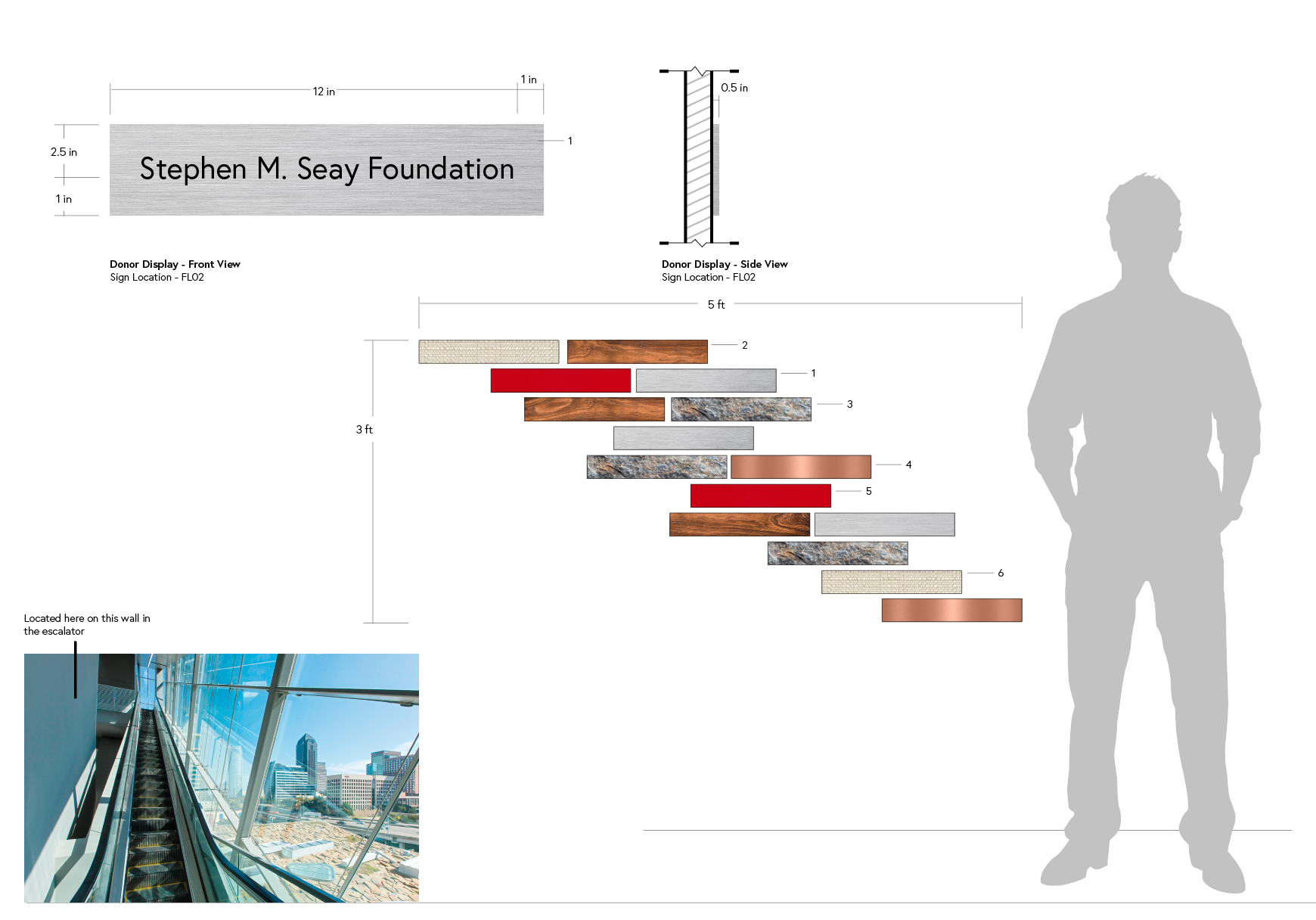
This is a donation display sign located on the wall to your left while you ride the escalator up to get to the first museum exhibition. This is the first interaction that guests would have with using different materials in my signages for each floor. Specifically in this signage, if the donor only contributed to one specific floor/exhibition, then they would have their name laser engraved into the material for the corresponding floor material. If they donated to the museum as a whole, then stainless steel would be the material that is used for their name.
Material Key:
(1) Stainless Steel (2) Walnut Wood (3) Stone (4) Copper (5) Red Acrylic (6) Canvas
(1) Stainless Steel (2) Walnut Wood (3) Stone (4) Copper (5) Red Acrylic (6) Canvas
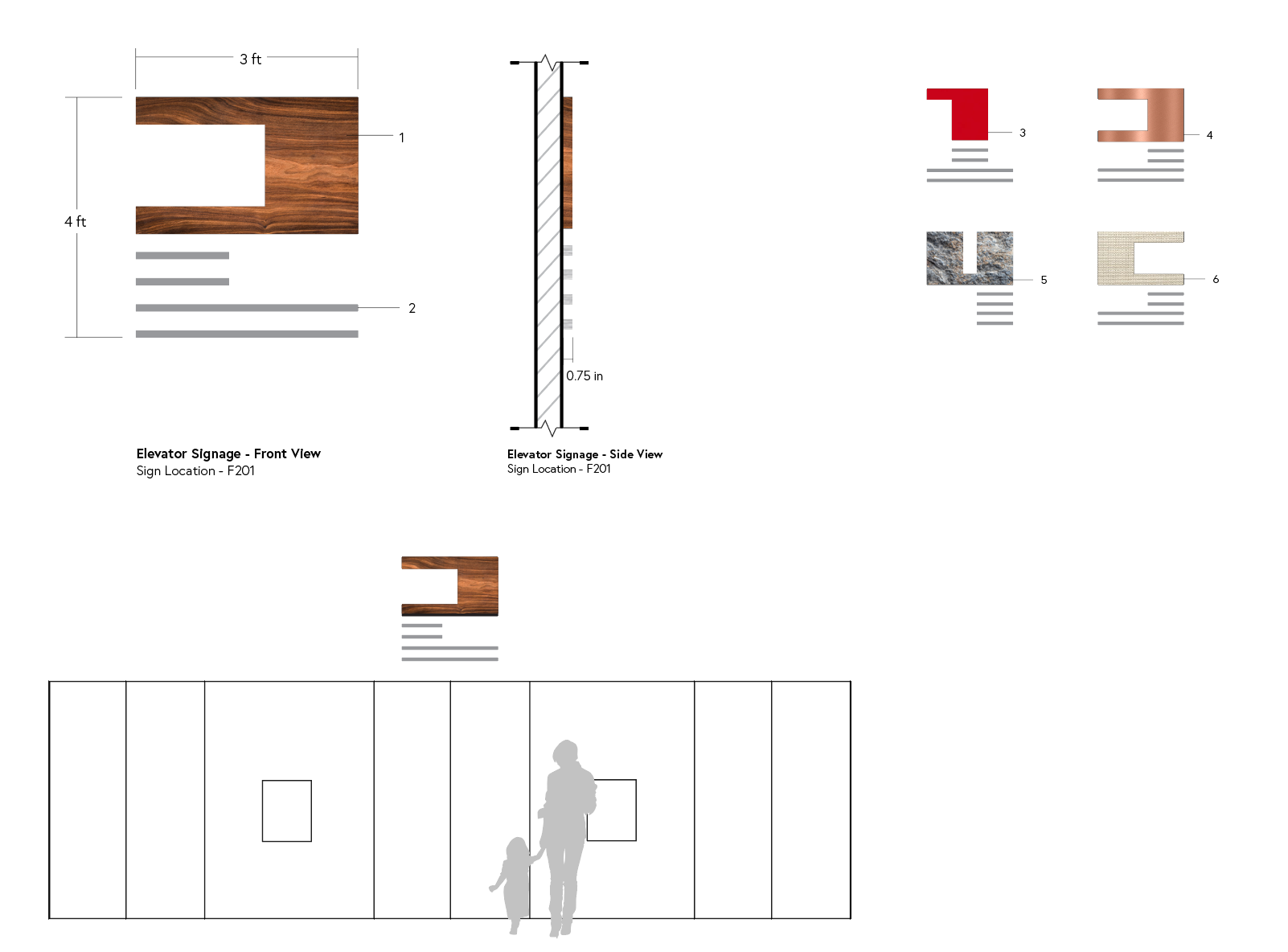
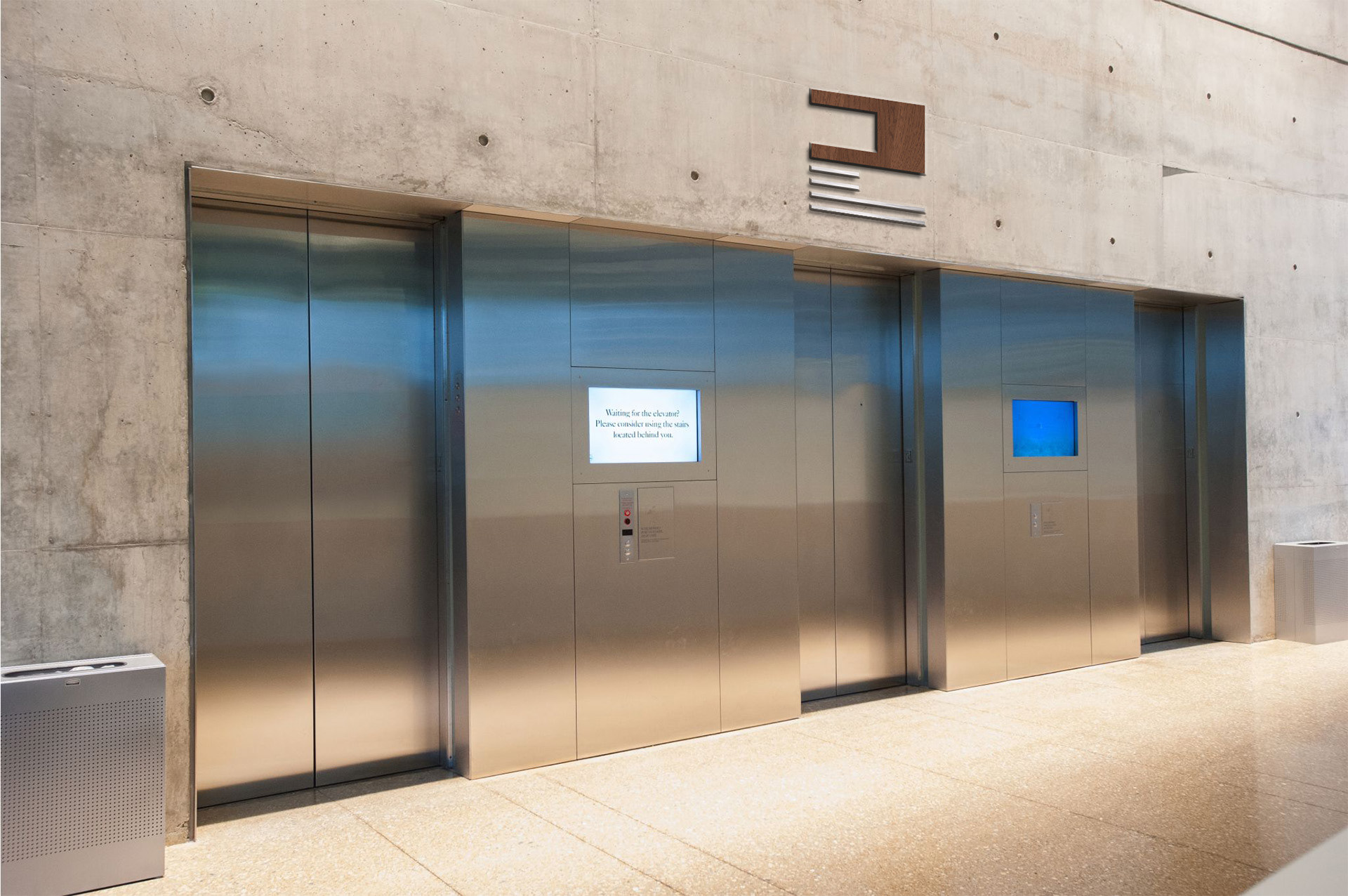
Like I mentioned earlier, each of the different materials used corresponds to the floor number. This is demonstrated below with the elevator number signs that I have designed for each floor of the museum.
Material Key:
(1) Walnut Wood (2) Stainless Steel (3) Red Acrylic (4) Copper (5) Stone (6) Canvas
(1) Walnut Wood (2) Stainless Steel (3) Red Acrylic (4) Copper (5) Stone (6) Canvas
This signage below would be located on the opposite wall of the elevator doors, that way you would see this signage when you get off of the elevator. The materials in the arrows would also change depending on the floor, as this sign is designed to tell you which exhibition is on that floor and in which direction.
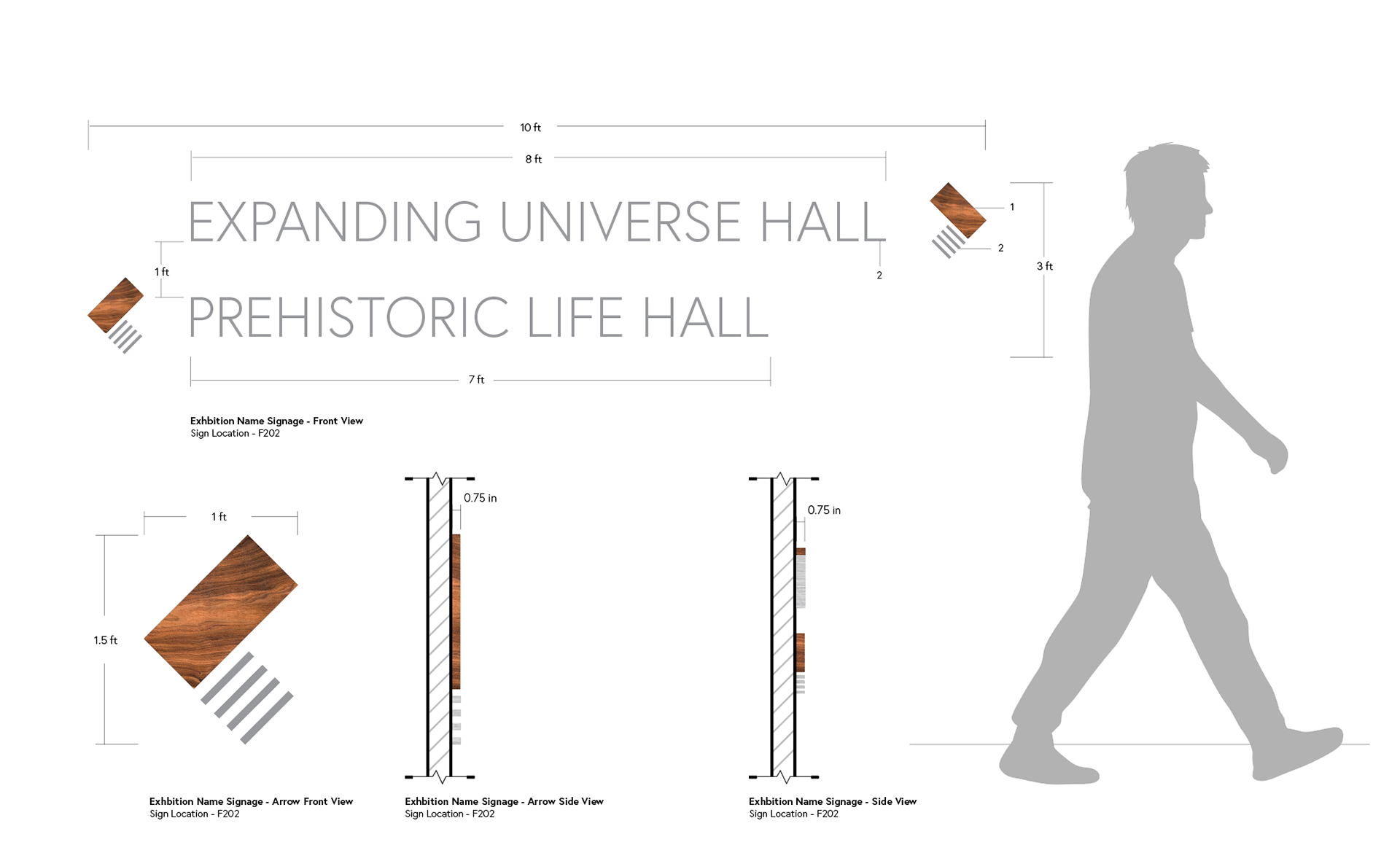
Material Key:
(1) Walnut Wood (2) Stainless Steel
(1) Walnut Wood (2) Stainless Steel